
1. Introduction
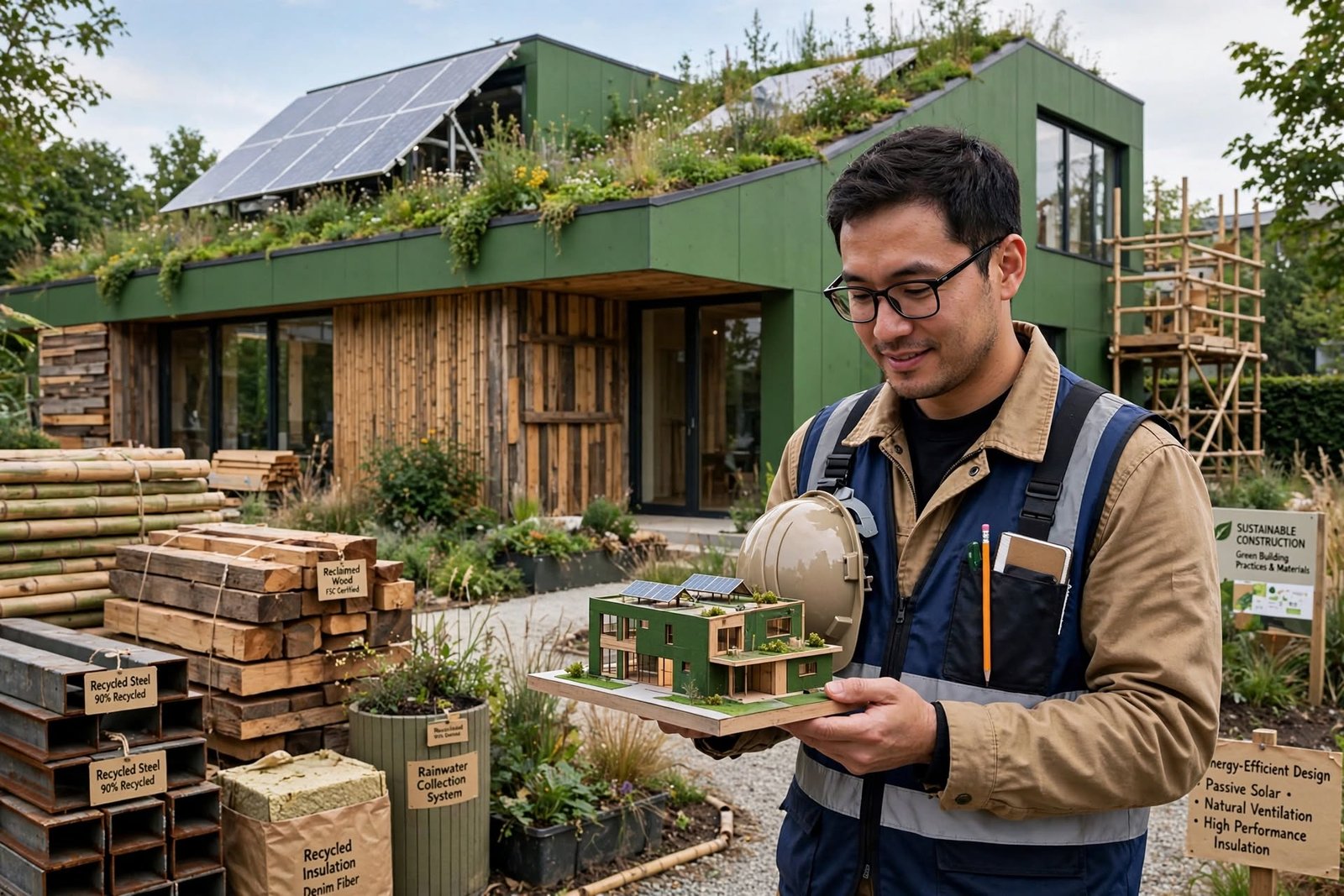
Sustainable construction is no longer a niche concept — it is rapidly becoming the mainstream approach to building in India and worldwide. As the construction industry accounts for a significant share of global energy consumption and carbon emissions, sustainable practices are essential for reducing environmental impact while delivering safe, comfortable, and economical structures.
This comprehensive guide explores the principles of sustainable construction — green building practices, sustainable materials, energy efficiency, and how they are shaping the future of Indian construction.
2. What Is Sustainable Construction?
Sustainable construction refers to the practice of designing, constructing, and operating buildings using environmentally responsible and resource-efficient processes throughout the building's lifecycle.
2.1 Core Principles
- Resource Efficiency: Minimizing the use of energy, water, and materials
- Environmental Protection: Reducing pollution, waste, and ecological damage
- Indoor Environmental Quality: Ensuring healthy living and working environments
- Site Sustainability: Protecting natural features and minimizing site disruption
- Economic Viability: Ensuring cost-effectiveness over the building's life cycle
- Social Responsibility: Improving quality of life for occupants and communities
3. Sustainable Materials
The choice of materials is one of the most significant decisions in sustainable construction. It affects everything from a building's carbon footprint to the health of its occupants. Here are some of the most effective sustainable materials available in India.
3.1 Fly Ash Bricks and Blocks
Manufactured from the industrial byproduct of coal combustion, fly ash bricks are a cornerstone of green building. They not only divert waste from landfills but are also lighter and provide better thermal insulation than traditional clay bricks, reducing both dead load and energy consumption.
3.2 Autoclaved Aerated Concrete (AAC) Blocks
AAC blocks are lightweight, precast concrete blocks that offer excellent thermal and acoustic insulation. Their porous structure makes them fire-resistant and reduces the overall weight of a building, which can lead to savings in foundation design.
3.3 Recycled Aggregates
Demolition waste (concrete, brick, etc.) can be crushed and processed into recycled aggregates. While not suitable for high-strength structural concrete, they are excellent for non-structural applications like sub-base for roads, drainage, and landscaping, significantly reducing the demand for virgin materials.
3.4 Bamboo and Engineered Timber
As renewable resources with low embodied energy, bamboo and timber are excellent sustainable choices. Bamboo, in particular, is abundant in India, grows rapidly, and offers a tensile strength comparable to steel. Engineered timber products like Glulam and CLT offer high structural performance for larger buildings.
3.5 Low-VOC Paints and Finishes
Volatile Organic Compounds (VOCs) are harmful chemicals found in many conventional paints and adhesives that can off-gas for years, impacting indoor air quality. Low-VOC or zero-VOC alternatives protect the health of residents and workers, contributing to a healthier indoor environment.
3.6 Supplementary Cementitious Materials (SCMs)
Materials like Fly Ash, Ground Granulated Blast-furnace Slag (GGBS), and Silica Fume can replace a portion of Portland cement in concrete. This is a powerful way to reduce the carbon footprint of concrete, as cement production is a major source of CO2 emissions. SCMs also often improve the durability and long-term strength of the concrete.
4. Energy-Efficient Design
4.1 Passive Design Strategies
- Building Orientation: Aligning the building to maximize natural light and minimize heat gain
- Shading Devices: Chajjas, louvers, and screens to reduce solar heat
- Natural Ventilation: Designing openings to enable cross-ventilation
- Thermal Mass: Using materials that absorb and release heat slowly
- Courtyards and Atriums: Traditional Indian design elements that improve airflow and daylight
4.2 Active Systems
- Solar photovoltaic panels for on-site electricity generation
- Solar water heating systems
- Energy-efficient HVAC systems (VRF, inverter technology)
- LED lighting with occupancy sensors
- Building Management Systems (BMS) for optimized operation
5. Water Conservation
- Rainwater Harvesting: Collecting and storing rainwater for reuse
- Low-Flow Fixtures: Water-efficient taps, showers, and toilets
- Greywater Recycling: Treating and reusing water from sinks and showers for flushing and irrigation
- Drip Irrigation: Efficient landscape watering
- Permeable Paving: Allowing water to infiltrate the ground rather than run off
6. Waste Reduction and Recycling
- Design for Waste Minimization: Accurate quantity estimation to reduce material wastage
- Prefabrication: Off-site manufacturing reduces site waste and improves quality
- Construction & Demolition Waste Management: Segregation and recycling of construction waste
- Reuse of Formwork: Using reusable formwork systems to minimize timber consumption
- Composting Organic Waste: For landscaping and site maintenance
7. Green Building Certifications in India
7.1 IGBC (Indian Green Building Council)
The IGBC offers rating systems for various building types including homes, offices, factories, schools, and townships. Ratings include Certified, Silver, Gold, and Platinum.
7.2 GRIHA (Green Rating for Integrated Habitat Assessment)
GRIHA is India's national rating system for green buildings, developed by TERI and the Ministry of New and Renewable Energy. It evaluates buildings on 34 criteria across various categories.
7.3 LEED India
LEED (Leadership in Energy and Environmental Design) is an internationally recognized green building certification program. In India, it is administered by IGBC.
8. Challenges and Opportunities
8.1 Challenges
- Higher initial costs of some sustainable materials and technologies
- Limited availability of trained professionals and skilled workers
- Lack of awareness among clients and developers
- Regulatory and approval challenges for innovative systems
- Performance gaps between design intent and actual operation
8.2 Opportunities
- Long-term cost savings through energy and water efficiency
- Improved occupant health and productivity
- Enhanced property value and market differentiation
- Government incentives and faster approvals for green buildings
- Reduced environmental impact and carbon footprint
Insight: While initial costs of sustainable construction can be 5–10% higher, the lifecycle savings typically exceed the initial investment within 5–7 years.
9. Conclusion
Sustainable construction represents the future of the construction industry. By embracing green building practices, sustainable materials, energy-efficient design, and waste reduction, we can build structures that are not only environmentally responsible but also economically viable and socially beneficial.
At Construction Aid, we bring over 40 years of experience in civil engineering and construction consultancy. We are committed to integrating sustainability principles into our projects, helping clients achieve their environmental and economic goals.
Planning a Sustainable Project?
Get expert guidance on green building, sustainable materials, and energy-efficient design from Construction Aid.
Schedule a Consultation